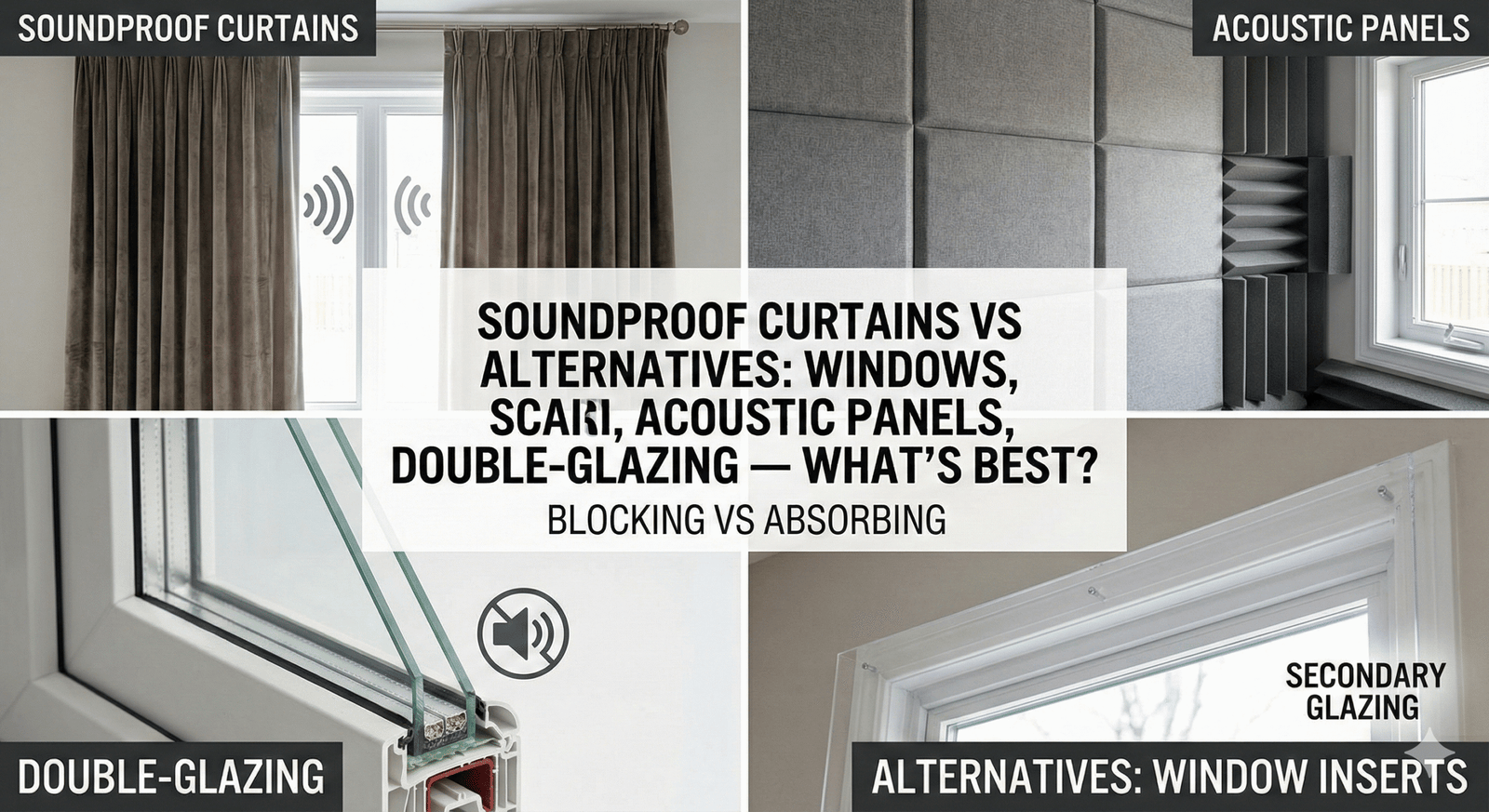
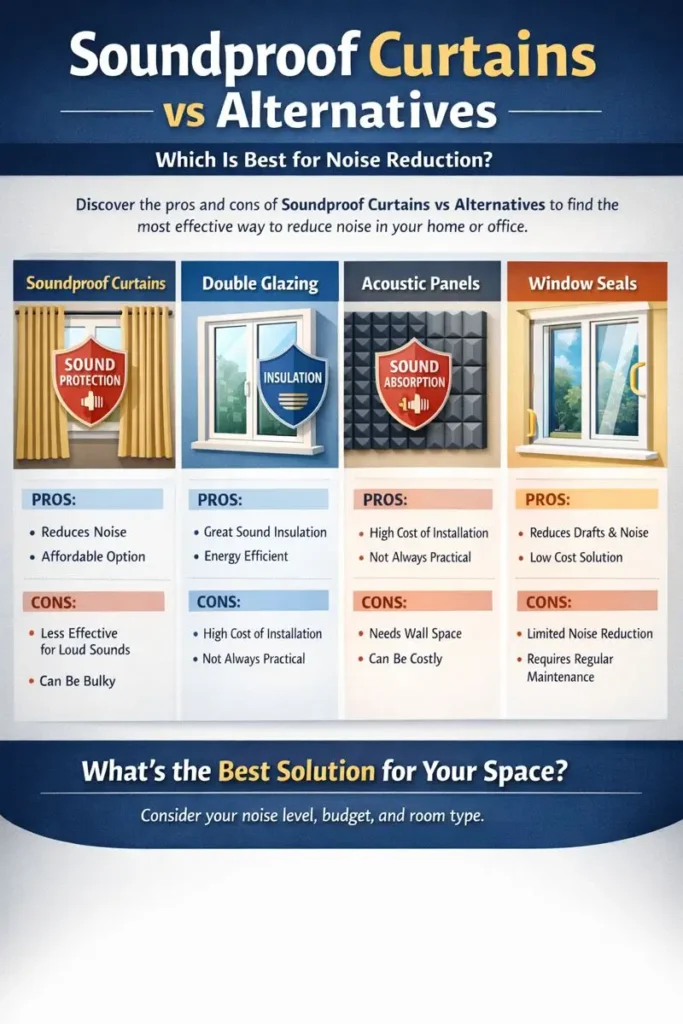
Discover the pros and cons of Soundproof Curtains vs Alternatives to find the most effective way to reduce noise in your home or office.
When outside noise starts creeping into your home or workspace, soundproof curtains are often the first solution people try. They’re inexpensive, easy to install, and promise quick relief. But how do they really compare to stronger soundproofing methods like acoustic panels, upgraded windows, or full double-glazing?
This guide breaks down what each option can — and cannot — do, and gives you a practical decision matrix to choose the best approach for your space, budget, and noise problem.
What Soundproof Curtains Actually Do
Soundproof curtains (also called acoustic curtains or blackout noise-reducing drapes) are designed to absorb and dampen sound — especially mid- and high-frequency noise such as voices, TVs, appliances, or light street noise.
Benefits
- Affordable and non-invasive — ideal for renters or temporary setups.
- Quick installation — hang them like regular curtains.
- Absorbs echo inside rooms — improves acoustics for calls, content creation, and quiet work.
- Blocks light and drafts — bonus comfort.
Limitations
- They do not block structural noise such as heavy traffic rumble, bass vibrations, or noisy neighbors through walls.
- Mostly reduces airborne sound, not impact noise.
- Reduction is moderate, not total.
If your goal is complete sound isolation, curtains alone won’t achieve it. They are best viewed as a layer in a soundproofing strategy — not a standalone solution for severe noise.
Soundproof Curtains vs Acoustic Panels
What Acoustic Panels Do
Acoustic panels are designed primarily for sound absorption, not isolation. They improve the sound quality inside a room by reducing echo, reverberation, and flutter. Think recording studios, offices, or home theaters.
Curtains vs Panels: Which Is Better?
| Feature | Soundproof Curtains | Acoustic Panels |
| Noise Blocking | Mild | Low (almost none) |
| Echo Reduction | Good | Excellent |
| Installation | Very easy | Requires mounting |
| Best For | Bedrooms, apartments | Studios, meeting rooms |
Verdict:
If your main problem is echo or poor audio quality, acoustic panels outperform curtains. If you want to soften light exterior noise in addition to reducing echo, curtains offer more versatility.
Soundproof Curtains vs Soundproof Windows
What Soundproof Windows Do
Soundproof windows use laminated glass, thicker panes, wider air gaps, and airtight seals to block external noise. They address the biggest weak point in most homes: the window frame.
Curtains vs Windows
| Feature | Curtains | Soundproof Windows |
| Noise Reduction | Mild–moderate | High |
| Cost | Low | Very high |
| Installation | Simple | Professional + invasive |
| Effect on Light | Can block light | No change |
Verdict:
Soundproof windows are the most effective solution for traffic, construction noise, aircraft noise, and loud neighbors. Curtains offer partial relief at a fraction of the cost.
Soundproof Curtains vs Double-Glazing
Double-glazing is a middle-ground window upgrade: two panes of glass with an air gap, offering better insulation and moderate sound reduction.
Curtains vs Double-Glazing
- Double-glazing reduces noise 20–40% (varies by construction).
- Curtains reduce noise 10–25%, depending on thickness and layering.
- Curtains can enhance double-glazing by absorbing remaining airborne noise.
Verdict:
Double-glazing is a strong long-term investment for homeowners wanting quieter living. Curtains are a good complementary solution or a temporary alternative for renters.
Soundproof Curtains vs Wall Insulation
What Wall Insulation Does
Adding mineral wool, resilient channels, or mass-loaded vinyl behind drywall targets the wall — another major path through which noise travels.
Curtains vs Wall Insulation
| Feature | Curtains | Wall Insulation |
| Noise Blocking | Mild | High |
| Best For | Window noise | Neighbor noise, structural noise |
| Cost | Low | Medium–high |
| Installation | Easy | Construction work required |
Verdict:
Curtains can’t compete with insulation for blocking neighbor noise or structural vibrations. Insulation is best when noise comes through walls, not windows.
When Are Soundproof Curtains Enough?
Soundproof curtains work best in scenarios where noise is moderate and airborne. They are ideal for:
1. Apartments with mild traffic noise
If your street is busy but not overwhelming, curtains can noticeably soften the sounds of passing cars, horns, and pedestrians.
2. Home offices
Curtains help reduce light chatter from other rooms and improve audio quality for Zoom calls.
3. Bedrooms near light exterior noise
They block drafts and light as well — ideal for improving sleep quality.
4. Renters
No construction, no wall damage, and easy removal.
5. Spaces with echo problems
Great for hard-surface rooms where sound bounces around — living rooms, studios, large bedrooms.
When You Need More Than Curtains
Choose a more extensive solution when:
1. Noise is loud, constant, or low-frequency
Heavy traffic rumble, trains, or bass from neighbors travel through structures — curtains barely affect this.
2. You’re near main roads, airports, or rail lines
Soundproof windows or laminated glass are significantly more effective.
3. Noise is coming through the walls
Wall insulation or mass-loaded vinyl is the correct solution.
4. You’re building a studio, podcast room, or home theater
You’ll likely need:
- acoustic panels,
- wall insulation,
- door seals,
- possibly upgraded windows.
5. You want long-term property value
Double-glazing and soundproof windows add lasting benefit and energy efficiency.
Decision Matrix: The Right Soundproofing Based on Noise, Room Type & Budget
Use this checklist to determine which solution is best for your situation.
1. Identify Your Noise Source
| Noise Type | Best Solution |
| Light traffic noise | Curtains or double-glazing |
| Heavy traffic / trains | Soundproof windows + curtains |
| Heavy traffic/trains | Curtains + wall insulation |
| Bass, subwoofers, vibrations | Structural insulation (curtains not effective) |
| Echo / reverb | Acoustic panels or curtains |
2. Match the Room Type
| Room | Recommended Solution |
| Bedroom | Curtains + optional window upgrades |
| Office | Curtains for echo/noise absorption |
| Studio | Acoustic panels + insulation; curtains only for supplementary absorption |
| Living room | Curtains + double-glazing for comfort + energy savings |
3. Consider Your Budget
| Budget | Best Options |
| Low (Under $150) | Soundproof curtains |
| Medium ($300–$1,000) | Curtains + acoustic panels or basic window inserts |
| High ($1,500–$5,000+) | Double-glazing or full soundproof windows |
4. Installation Requirements
- Do you rent?
→ Curtains or removable window inserts - Can you do light construction?
→ Acoustic panels, minor insulation - Can you replace windows?
→ Double-glazing or full soundproof windows
5. Light Requirements
- Need darkness for sleep?
→ Blackout acoustic curtains - Need natural light?
→ Soundproof windows or double-glazing (curtains optional)
Final Verdict: What’s Best?
- Best quick fix: Soundproof curtains
- Best for echo and audio quality: Acoustic panels
- Best for outside noise: Soundproof windows
- Best long-term and energy-efficient upgrade: Double-glazing
- Best for neighbor noise through walls: Wall insulation
Most people benefit from layering solutions:
Curtains + (window upgrade or insulation) = the most balanced, cost-effective improvement.