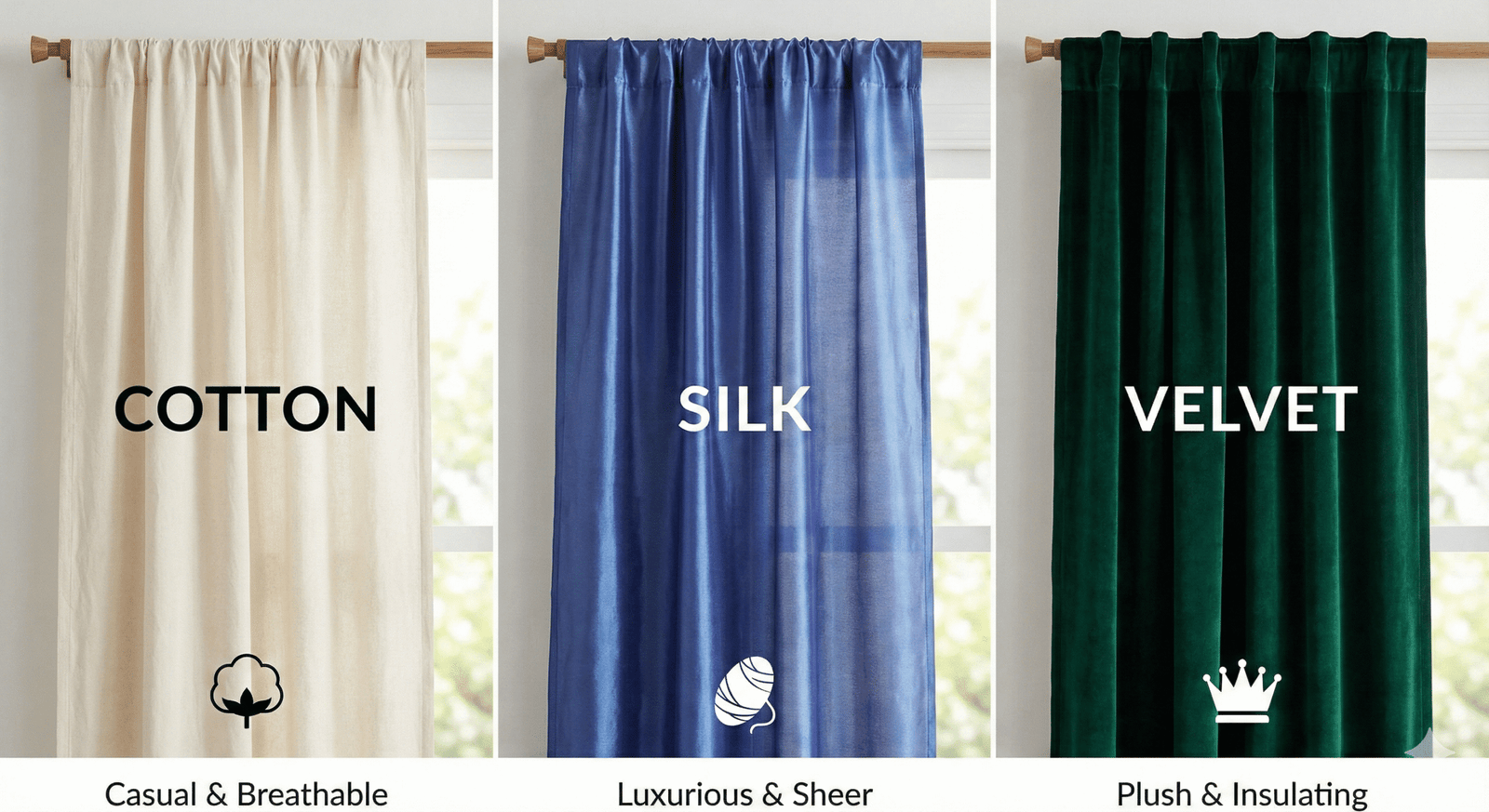
Choosing the right curtain fabric affects both the look and performance of your window treatments. In this guide, we compare silk vs velvet vs cotton curtains—their strengths, limitations, maintenance needs, and ideal applications—so you can select the perfect fabric for your home or office.
Quick Fabric Comparison Overview
Selecting curtain fabric affects both room aesthetics and daily functionality. Silk, velvet, and cotton each offer distinct benefits for different spaces and lifestyles. This guide examines how these three popular curtain materials compare across key factors, including appearance, light filtering, durability, care requirements, and price.
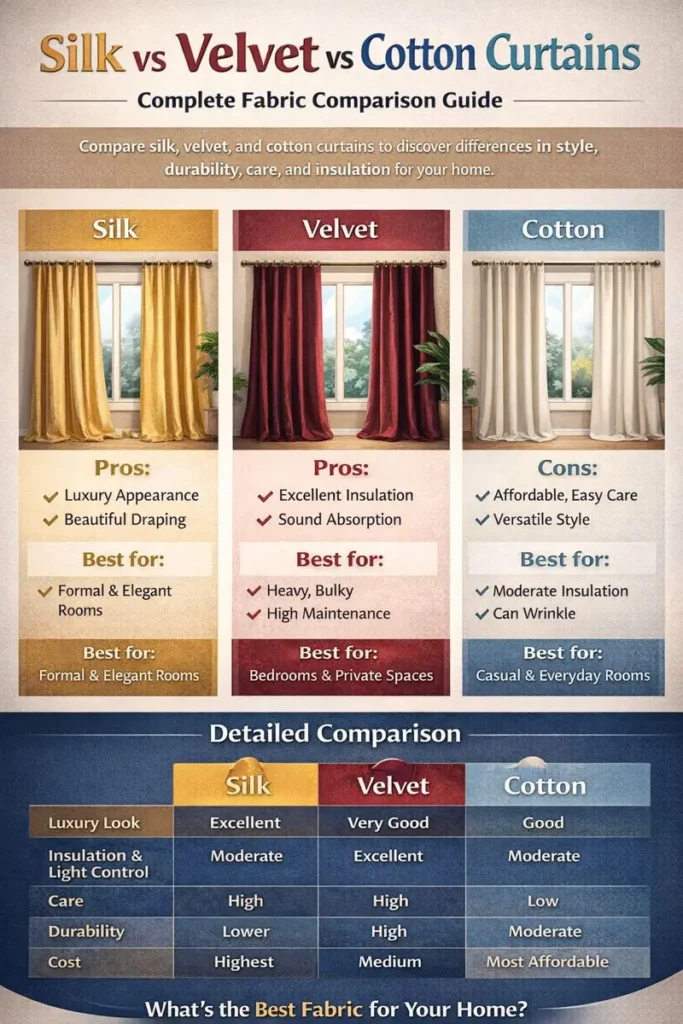
| Feature | Silk Curtains | Velvet Curtains | Cotton Curtains |
|---|---|---|---|
| Light Blocking | Moderate (filters light) | Excellent (near-blackout) | Varies (sheer to heavy) |
| Insulation | Low | Excellent | Moderate |
| Durability | Moderate (sun-sensitive) | High | High |
| Maintenance | Dry clean only | Professional or gentle wash | Machine washable |
| Price Range | High ($$$) | Medium–High ($$–$$$) | Low–Medium ($–$$) |
| Best For | Formal rooms, luxury spaces | Bedrooms, theaters, cold climates | Family rooms, kitchens, casual spaces |
| Drape Quality | Fluid, graceful | Structured, dramatic | Natural, relaxed |
Understanding Curtain Fabric Choices
The fabric you choose for window treatments influences room temperature, natural lighting, privacy levels, and overall design aesthetic. Modern curtain fabrics range from natural fibers such as silk and cotton to plush-pile materials like velvet. Each material interacts differently with sunlight, responds uniquely to cleaning methods, and creates distinct visual impressions.
Beyond appearance, consider practical factors: rooms requiring darkness benefit from dense fabrics, high-traffic areas need washable materials, and formal spaces may warrant luxury textiles despite higher maintenance demands.
Silk Curtains: Luxury Window Treatments
What makes silk curtains distinctive?
Silk curtains feature natural protein fibers that create luminous sheen and elegant drape. The fabric reflects ambient light, producing depth and visual interest throughout changing daylight conditions. Silk drapes in soft, flowing folds that appear effortlessly refined.
Visual characteristics and aesthetic appeal
The natural luster of silk fabric adds sophistication without patterns or embellishments. Light plays across silk surfaces, creating a subtle shimmer that enhances room’s elegance. This quality makes silk particularly effective in dining rooms, master suites, and traditional living spaces where a refined atmosphere matters.
Silk works well in neutral color palettes—ivory, champagne, taupe, and soft gray—complementing various design styles from classic to contemporary. The fabric’s inherent beauty stands alone without requiring busy prints or decorative trim.
How do silk curtains filter light?
Silk provides moderate light filtration rather than complete room darkening. Natural silk allows diffused sunlight to enter while maintaining daytime privacy. This characteristic suits sitting rooms, home offices, or bedrooms where you want natural illumination without harsh glare.
For enhanced light blocking, pair silk curtains with blackout liners. This combination preserves an elegant appearance while improving functionality for sleeping spaces or media rooms.
What are the silk curtain maintenance requirements?
Silk demands careful handling compared to synthetic curtain materials. Direct sunlight gradually weakens silk fibers and causes color fading, making UV-protective window films or blackout liners valuable investments for preserving fabric integrity.
Silk curtain care guidelines:
- Vacuum regularly using soft brush attachments to remove dust
- Professional dry cleaning every 12-18 months maintains optimal condition
- Avoid home washing—water causes spotting, shrinkage, or texture damage
- Keep away from moisture and temperature fluctuations
- Handle gently to prevent snags in delicate fibers
How long do silk curtains last?
Well-maintained silk curtains last 10-15 years in controlled environments. Rooms with stable temperature, managed humidity, and limited direct sun exposure preserve silk longer. Factor professional cleaning costs into long-term ownership expenses.
What do silk curtains cost?
Pure silk represents premium curtain fabric pricing. Expect to invest $80-$300+ per panel, depending on size, silk quality, and construction. Custom silk drapery treatments cost considerably more.
Silk-blend options—combining silk with polyester or cotton—offer middle-ground pricing at $40-$120 per panel while maintaining much of silk’s aesthetic appeal with improved durability.
Velvet Curtains: Luxurious Functionality
What defines velvet curtain fabric?
Velvet features dense pile construction, creating rich texture and substantial weight. The fabric surface catches light at varying angles, producing color depth that adds dimension to room design. Unlike lightweight materials, velvet drapes with a commanding presence and structured folds.
How does velvet perform for light blocking?
Velvet excels at blocking ambient light due to its tight weave and thick pile structure. This makes velvet curtains an outstanding choices for bedrooms, nurseries, or home theaters where controlling natural light matters. Quality velvet provides near-blackout conditions without additional liners.
Velvet light-blocking benefits:
- Dense fabric construction prevents light penetration
- Natural room darkening without blackout liners
- Consistent performance across various colors
- Effective for shift workers or children’s sleep schedules
Do velvet curtains provide insulation?
Beyond light control, velvet offers excellent thermal insulation properties. The fabric thickness helps regulate room temperature by blocking drafts during winter and preventing heat transfer in summer months. This insulation quality reduces energy costs while improving comfort.
Velvet curtains also provide sound dampening, absorbing noise from both exterior and interior sources. This acoustic benefit proves valuable in urban environments, busy households, or rooms where quiet concentration matters—home offices, reading spaces, or meditation areas.
What spaces work best with velvet curtains?
Velvet complements rooms seeking warmth, intimacy, and a sophisticated atmosphere. Consider velvet for master bedrooms, formal living rooms, home theaters, cozy reading nooks, or dining spaces. The fabric adapts to both maximalist and modern minimalist design aesthetics depending on color selection.
Popular velvet curtain colors include deep jewel tones (emerald, sapphire, burgundy), rich neutrals (charcoal, navy, chocolate), and soft pastels (blush, sage, dusty blue).
How do you maintain velvet curtains?
Quality velvet withstands years of use with proper maintenance. The fabric resists wrinkles naturally and holds shape well, though it requires specific care to preserve its distinctive pile texture.
Velvet curtain maintenance steps:
- Vacuum weekly with upholstery attachment in the direction of the nap
- Spot clean by dabbing gently—never rub the pile
- Steam to remove crush marks without direct fabric contact
- Professional cleaning preserves appearance long-term
- Some modern velvet blends tolerate gentle machine washing (check labels)
What about the velvet curtain weight and installation?
Velvet’s substantial weight requires sturdy curtain rods and secure mounting hardware. Standard lightweight brackets may sag under velvet panels. Invest in heavy-duty rods rated for combined panel weight—typically 2-4 pounds per foot of curtain width.
This weight contributes to velvet’s impressive drape quality and stability. Velvet curtains resist billowing and maintain position even in rooms with air circulation from HVAC systems or ceiling fans.
What do velvet curtains cost?
Quality velvet curtains range $50-$200+ per panel, depending on construction, fiber content (cotton velvet, synthetic velvet, silk velvet), and size. Custom drapery increases costs but ensures a perfect fit anda professional finish.
Cotton Curtains: Versatile Practicality
Why choose cotton curtain fabric?
Cotton’s natural plant fibers provide breathability, easy maintenance, and style versatility across wide price ranges. The fabric feels inherently fresh and approachable, creating relaxed, comfortable room atmospheres suitable for various design styles—farmhouse, coastal, Scandinavian, bohemian, or transitional.
How do cotton curtains handle light?
Cotton offers flexible light control depending on weave density and fabric weight. Lightweight cotton voiles create airy, translucent window coverage that diffuses harsh sunlight while maintaining outward views. Medium-weight cotton blends provide moderate privacy with soft natural illumination. Heavy cotton canvas or duck fabric delivers substantial light blocking comparable to lined curtains.
Cotton curtain light-filtering options:
- Sheer cotton voile: maximum light, minimal privacy
- Medium cotton twill: balanced light filtering and privacy
- Heavy cotton canvas: substantial light
- Layered cotton: combine sheers with heavy panels for flexibility
What makes cotton curtains practical?
Cotton’s greatest advantage lies in its simple care requirements. Most cotton curtains tolerate machine washing, making them ideal for high-traffic areas, homes with children or pets, or any space where cleanliness and freshness matter. Regular washing maintains appearance without professional cleaning expenses.
Cotton withstands frequent handling and cleaning cycles better than delicate luxury fabrics. The material proves forgiving with everyday wear, though prolonged direct sun exposure may cause gradual fading. Choosing pre-shrunk, colorfast cotton minimizes these concerns.
Do cotton curtains wrinkle easily?
Cotton wrinkles more readily than synthetic alternatives or blended fabrics. Some homeowners embrace this natural, lived-in appearance as part of cotton’s casual charm. Others prefer wrinkle-resistant cotton blends (cotton-polyester combinations) or plan for occasional steaming or ironing.
Hanging cotton curtains slightly damp after washing allows gravity to naturally release wrinkles during drying.
Where do cotton curtains work best?
Cotton suits rooms requiring breathability, easy cleaning, or relaxed aesthetics. Consider cotton curtains for kitchens, bathrooms, family rooms, children’s bedrooms, casual dining areas, sunrooms, or guest rooms. The fabric’s air circulation properties prevent stuffiness while maintaining comfortable room environment.
Cotton also works well in rental properties or frequently redecorated spaces where budget-friendly updates matter more than long-term investment pieces.
How much do cotton curtains cost?
Cotton curtains span a wide price range, accommodating virtually any budget. Basic cotton panels start at $15-$40 per panel, while premium organic cotton, designer prints, or specialty weaves reach $60-$150 per panel.
This affordability allows seasonal style updates or design experiments without significant financial commitment. Budget savings can be redirected toward other room elements like furniture, lighting, or decorative accessories.
Frequently Asked Questions About Curtain Fabrics
Which curtain fabric blocks the most light?
Velvet curtains block the most light due to dense pile construction and tight weave. Velvet provides near-blackout conditions without additional liners, making it ideal for bedrooms and media rooms. Silk offers moderate light filtering, while cotton ranges from sheer to substantial depending on fabric weight.
What is the most durable curtain fabric?
Cotton and velvet offer superior durability compared to silk. Cotton withstands frequent washing and handling, while quality velvet maintains its appearance for years with proper care. Silk requires more delicate handling and professional maintenance, but lasts well in controlled environments away from direct sunlight.
Which curtain fabric is easiest to clean?
Cotton curtains are easiest to clean, with most styles tolerating regular machine washing. Velvet requires professional cleaning or careful, gentle washing, depending on fabric type. Silk demands professional dry cleaning only to prevent damage.
Do silk curtains fade in sunlight?
Yes, silk curtains fade when exposed to prolonged direct sunlight. UV rays gradually weaken silk fibers and diminish color vibrancy. Protect silk curtains with UV-blocking window films, sheer underlayers, or blackout liners. Rotate panels periodically to ensure even wear.
Can you wash velvet curtains at home?
Some modern velvet blends tolerate gentle machine washing on delicate cycles with cold water. Always verify care labels before attempting home washing. Traditional cotton velvet or silk velvet requires professional cleaning. When unsure, professional cleaning preserves the velvet pile texture and prevents damage.
What curtain fabric is best for cold climates?
Velvet curtains perform best in cold climates due to their excellent thermal insulation properties. The dense fabric blocks drafts and prevents heat loss through windows. Layered cotton curtains (heavy panels over sheers) also provide good insulation at a lower cost.
Which curtain fabric offers the best value?
Cotton provides the best overall value, balancing affordability, durability, and easy maintenance. While silk and velvet offer aesthetic advantages, cotton’s machine-washable convenience and wide price range make it practical for most households and budgets.
Choosing the Right Curtain Fabric for Your Space
Decision framework for curtain fabric selection
Select a curtain fabric based on room function, aesthetic goals, maintenance capacity, and budget constraints. Consider these key factors:
Room requirements:
- Bedrooms: velvet for darkness and insulation
- Living rooms: silk for elegance, cotton for casual comfort
- Kitchens/bathrooms: cotton for washability and breathability
- Home theaters: velvet for light blocking and sound absorption
- Formal dining: silk for a sophisticated atmosphere
Lifestyle considerations:
- Families with children: cotton for easy cleaning
- Pet owners: cotton for washability and durability
- Busy professionals: cotton for low maintenance
- Design enthusiasts: silk or velvet for visual impact
Climate factors:
- Cold regions: velvet for insulation
- Warm climates: lightweight cotton for breathability
- Variable weather: medium-weight cotton or cotton-velvet combinations
Can you mix curtain fabrics throughout your home?
Mixing fabrics throughout your home creates tailored functionality while maintaining design cohesion. Use velvet in bedrooms for sleep quality, cotton in kitchens for practicality, and silk in dining rooms for elegance. Coordinate through consistent color palettes rather than matching identical fabrics in every room.
This approach optimizes each space according to specific needs while creating an intentional, sophisticated overall design.
What about curtain linings?
Curtain linings enhance performance across all fabric types. Blackout linings improve light control for silk or lightweight cotton. Thermal linings boost insulation for any curtain material. Protective linings shield delicate silk from sun damage while maintaining an elegant appearance.
Consider lined curtains when fabric alone doesn’t meet functional requirements but delivers the desired aesthetic.
Read More: https://atlantiscurtains.com/soundproof-curtains-vs-alternatives/
Making Your Final Curtain Fabric Decision
The best curtain fabric balances aesthetic preferences with practical performance for your specific lifestyle and space requirements.
Choose silk curtains when:
- You want sophisticated elegance in formal rooms
- You can commit to professional maintenance schedules
- You have controlled light exposure or plan protective liners
- Budget accommodates premium investment pieces
Choose velvet curtains when:
- You need maximum light blocking and thermal insulation
- You want dramatic visual impact and textural richness
- You appreciate sound-dampening qualities
- You have sturdy mounting hardware for heavy fabric weight
Choose cotton curtains when:
- You prioritize machine washability and easy care
- You want flexible style options across various price points
- You need breathable fabric for humid or high-traffic spaces
- You prefer casual, comfortable room aesthetics
- You redecorate frequently or work within tight budgets
Each fabric—silk, velvet, cotton—excels in different circumstances. Understanding these distinctions helps you create beautiful, functional spaces that serve both immediate needs and long-term satisfaction.